Rap Therapy

“Resistant to Therapy” or Lack of Fit

In urban cities across the country, many youth of color are simply under-served or inappropriately served by mental health organizations that often lack ethnically diverse staff and culture-specific, strength based models for promoting healing and wellness. These barriers to treatment, along with a general stigma associated with mental health discourage many teens of color from accessing services. Factoring in unprecedented budget cuts to education and enrichment programs (i.e., music, art and sports) and the situation worsens since many of these types of programs often serve as protective factors to building resiliency among troubled teens. Now more than ever, innovative therapeutic programs are needed to foster healing, facilitate youth development, and inspire hope for youth struggling to cope with an array of social and familial stressors.

A Community-driven Model for Healing

In 2004 Tomás Alvarez III, a social worker and founder of BRL, pioneered a Rap Therapy Program in partnership with BRL co-founder and community artist, Rob Jackson. The program utilized the process of creating Rap Music to promote mental health among teens of color for whom traditional forms of therapy were not a good fit. Shortly after, Tomás realized the potential of Rap Therapy to serve as a powerful tool for promoting healing as well as individual and community development. Over the next three years, Tomás worked closely with Rob and others to refine and develop the BRL Rap Therapy model which brought together the skills of both clinicians and community artists to provide an meaningful therapeutic experience centered around youth culture. In 2008, the BRL Rap Therapy Model was tagged as a “promising practice” for African American Transitional Age Youth (defined as youth age 16-24) by Alameda County Ethnic Services Manager, Gigi Crowder;

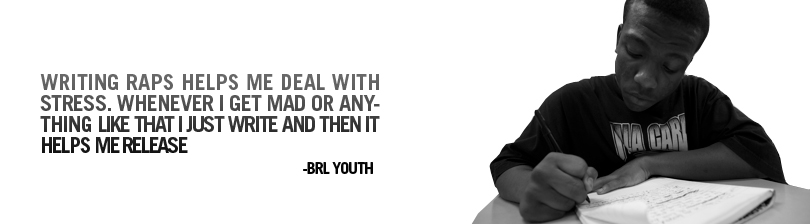
Rap Therapy reduces the stigma associated with recieving mental health because it builds on the strengths and culture of urban youth.

Since it’s creation, the BRL Rap Therapy Group has served a wide range of youth throughout Bay Area’s and has been especially popular among African American young men (who represent a majority of the youth served to the program). The BRL Rap Therapy Group has been the focus of two empirical studies (2006 and 2010), subject of a feature film (see BRL Film Project), center of attention of numerous press articles, and feature of a chapter in the upcoming book, Therapeutic Uses of Rap and Hip Hop. The BRL Rap Therapy Group has been recognized as one of the first models of its kind, and continues to set a standard for therapeutically-based hip hop groups in the field of mental health. Since 2004, the BRL Rap Therapy Group has been offered in the following institutions:


  • Berkeley High School Health Center (Berkeley, CA)
  • Berkeley Technology Academy (Berkeley, CA)
  • Oakland High School Wellness Center (Oakland, CA)
  • Rise Institute (San Francisco, CA)
  • Seneca Center –  (San Francisco/Bay Area, CA)
  • The Point Community Development Center (South Bronx, NY)


This year (2011-2012) BRL will be offering our Rap Therapy Group in the following milieus:
  • Ashland Youth Center Project (San Leandro, CA)
  • Seneca Center – San Francisco Connections Program (San Francisco, CA)
  • Seneca Center – Child Treatment Facility (San Francisco, CA)
  • Seneca Center – Solano Connections Program (Fairfield, CA)
  • Seneca Center – Barack Obama Middle School (Oakland, CA)
  • Seneca Center – Connections Program (Stockton, CA)
  • Oakland High School Wellness Center (Oakland, CA)
  • The Point Community Development Center (South Bronx, NY)

More on Rap Therapy

Rap Therapy or Hip Hop Therapy is the purposeful integration of elements of Hip Hop culture in a therapeutic setting to achieve catharsis and facilitate psychosocial and community development.

~Beats Rhymes and Life definition of Rap Therapy/Hip Hop Therapy

Since the early 2000’s mental health practitioners across the country have experimented with various applications of Rap Therapy in a variety of settings including schools, group homes, correctional youth facilities and mental health centers. Numerous empirical studies have found Rap Therapy to be highly valuable in improving therapeutic experience and mental health outcomes particularly among urban and minority youth. Due to the popularity of rap music among urban youth the application of Rap Therapy is catching the attention of mental health providers and systems of care as an effective culturally responsive, youth-centered and strength-based approach to therapy. Important to note is the fact that young people of color have been using rap (and other forms of Hip Hop expression) as a cathartic outlet for decades. Rap Therapy or Hip Hop Therapy simply builds upon existing community-identified strategies, such as the elements of Hip Hop (e.g., Break Dancing, Mc-ing, Dj-ing, Graffiti) which have helped countless youth heal and build power. Currently, many in the field of mental health are now looking towards community-identified strategies in order to partner with community and develop programs that are more align with the daily lives of consumers. Beats Rhymes and Life proudly endorses community-identified strategies as a framework because it acknowledges and make use of the community’s capacity to help and heal itself. Read More BRL’s Use of Rap Therapy in Oakland, CA Download Chapter on Rap Therapy by Tomás Alvarez III, MSW

The Birth of Beats Rhymes and Life

Watch the 2006 mini-documentary below on our first BRL Rap Therapy Group.